fullseye
Now the discipline-by-discipline exhibit rooms. Medicine, archaeology, biology, space, paleontology, geology, meteorology, oceanography, botany — this corner exists to show that the same op system cuts straight into images from any field. Caption conventions from here on are the same as above (real data gets a source link; AI-generated is labeled as such).
Paleontology
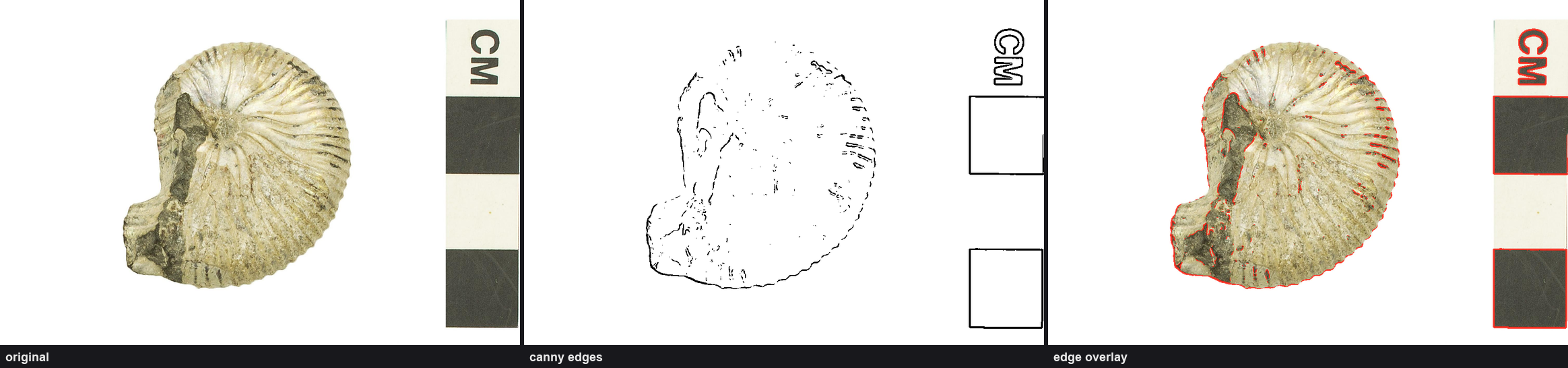
↑ The spiral of an ammonite fossil (Smithsonian Open Access, CC0) extracted with canny. Ops used: rgb1_to_gray, canny, overlay_mask.
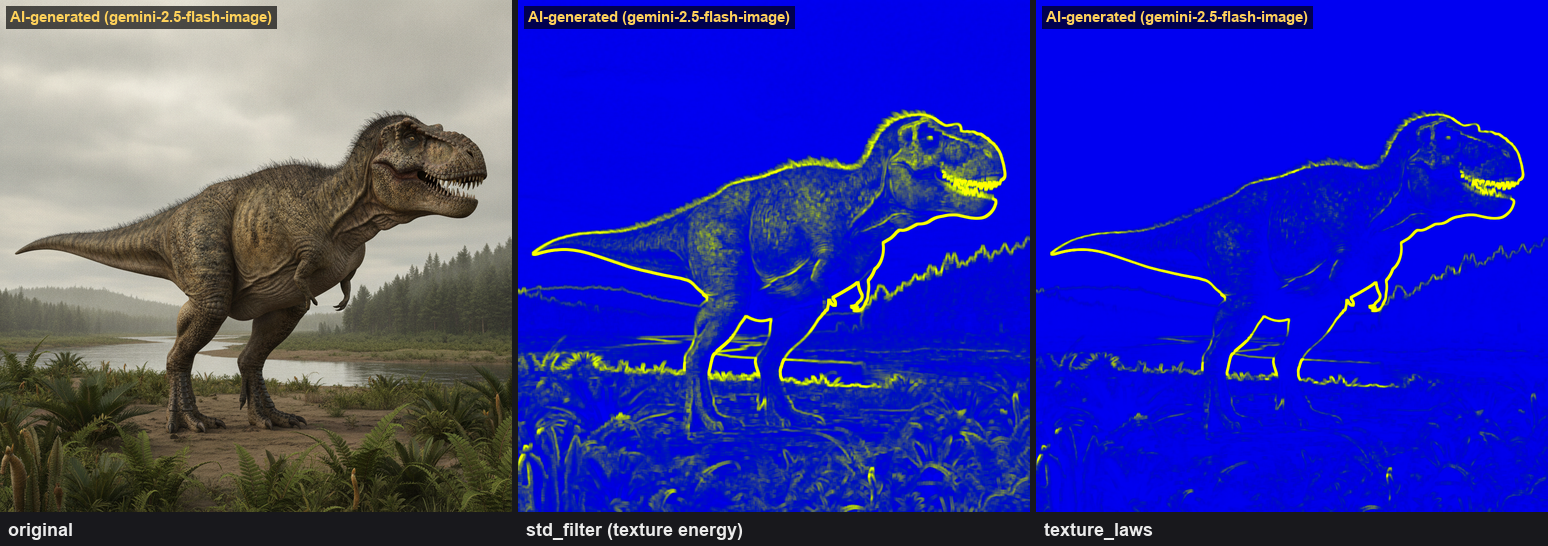
↑ Skin texture of a Tyrannosaurus life reconstruction analyzed with std_filter / texture_laws. The material is AI-generated (gemini-2.5-flash-image) simulated data (not a real specimen).
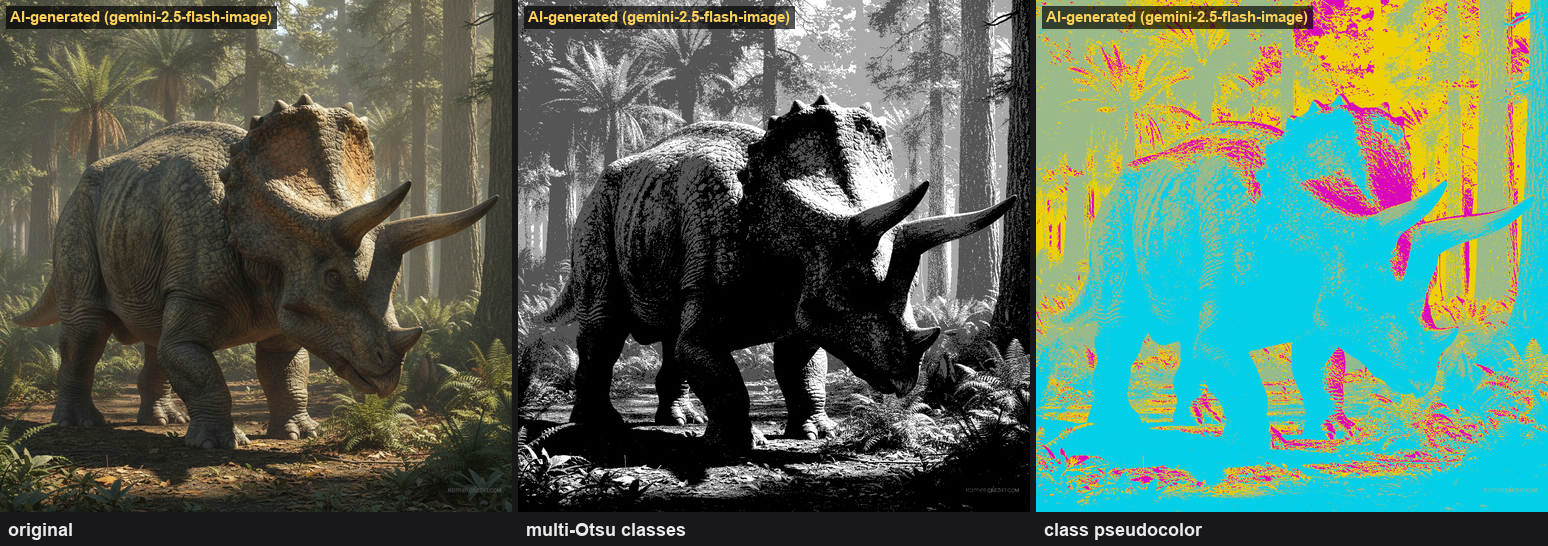
↑ A Triceratops life reconstruction region-classified by multi-Otsu. The material is AI-generated simulated data. Ops used: xsk2_multiotsu, colorize_labels.
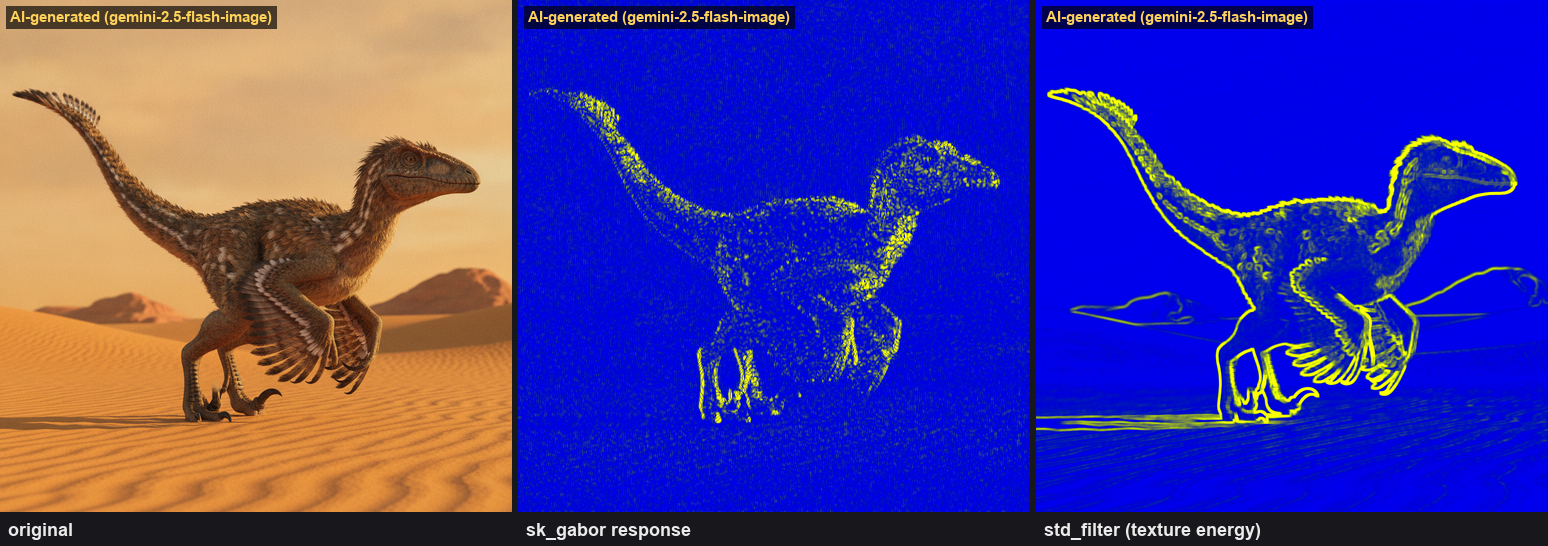
↑ The flow of a feathered dinosaur’s plumage analyzed with Gabor filters. The material is AI-generated simulated data. Ops used: sk_gabor, std_filter.
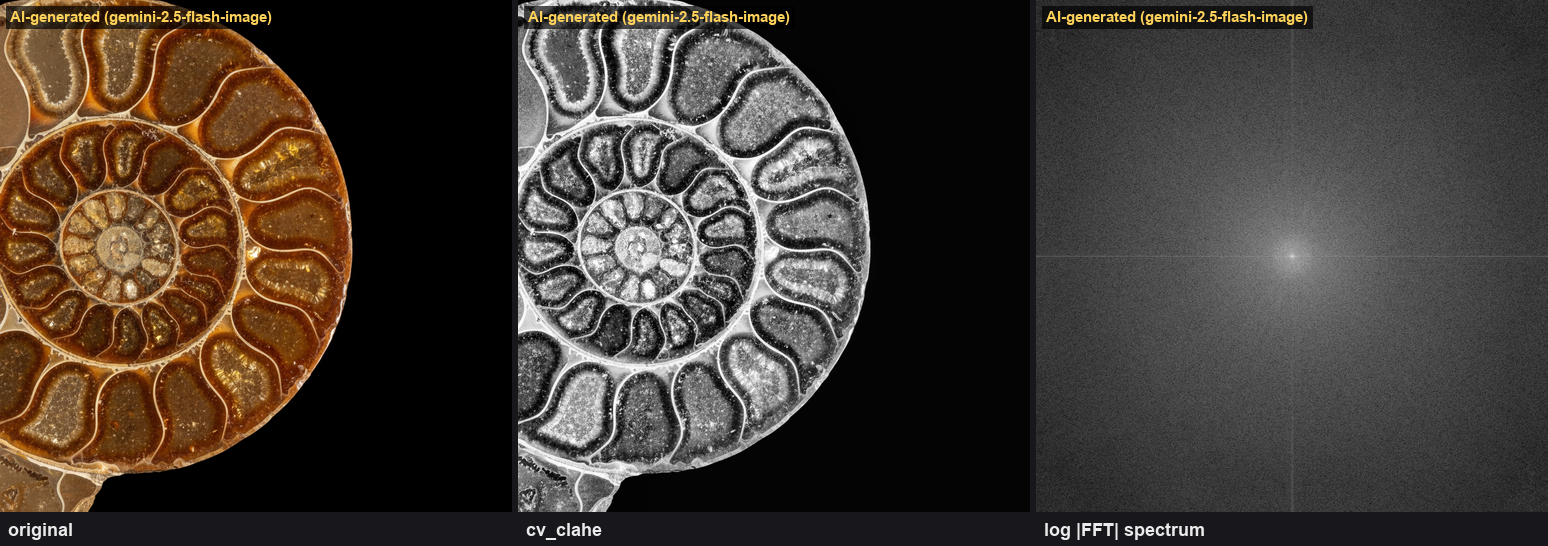
↑ The logarithmic spiral of an ammonite cross-section observed through its FFT spectrum. The material is AI-generated simulated data. Ops used: cv_clahe, cx_fft, cx_magnitude.
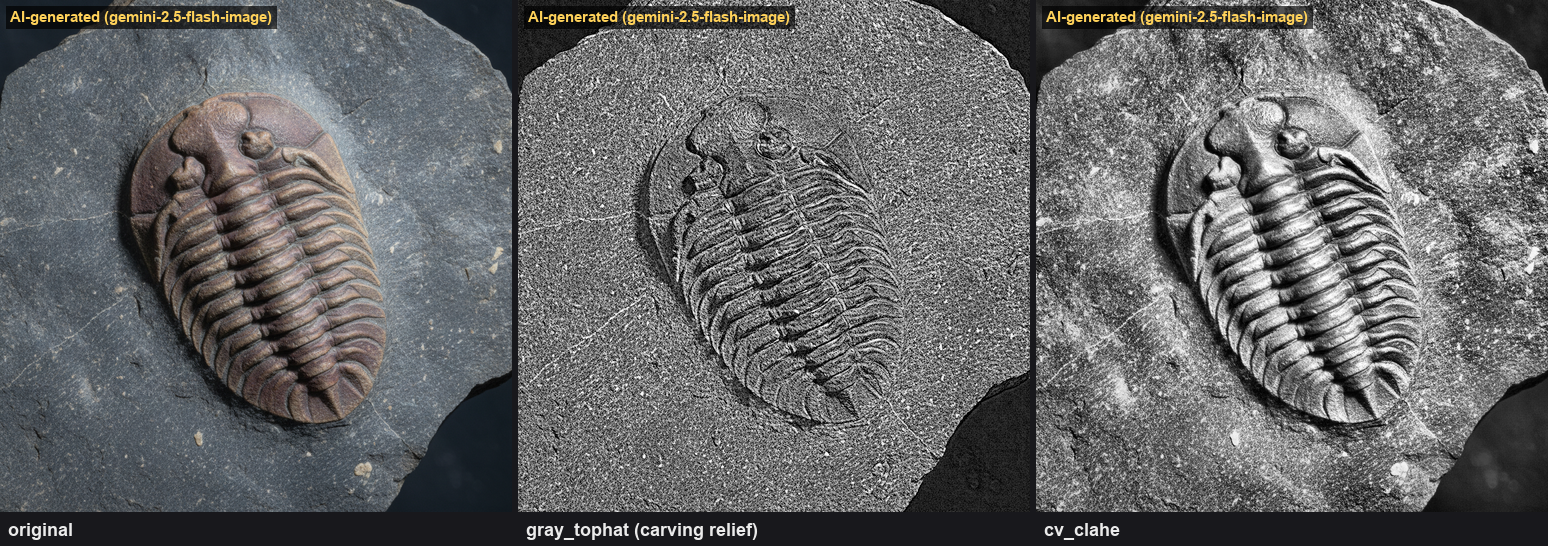
↑ A trilobite’s body segments relief-enhanced with gray_tophat. The material is AI-generated simulated data.
Space
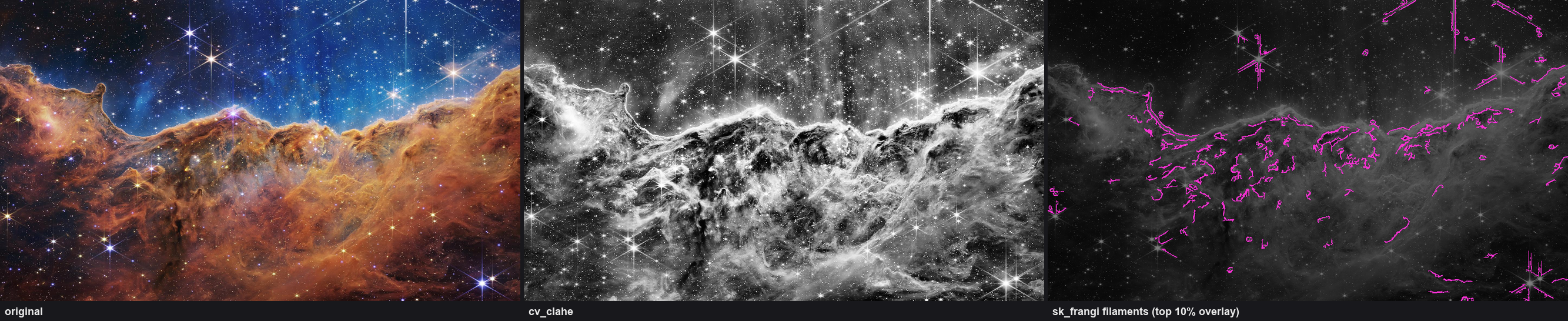
↑ The filament structure of the Carina Nebula (NASA/STScI Webb, public domain) extracted with sk_frangi — an op originally for enhancing blood vessels. A case of a medical op cutting into astronomy.
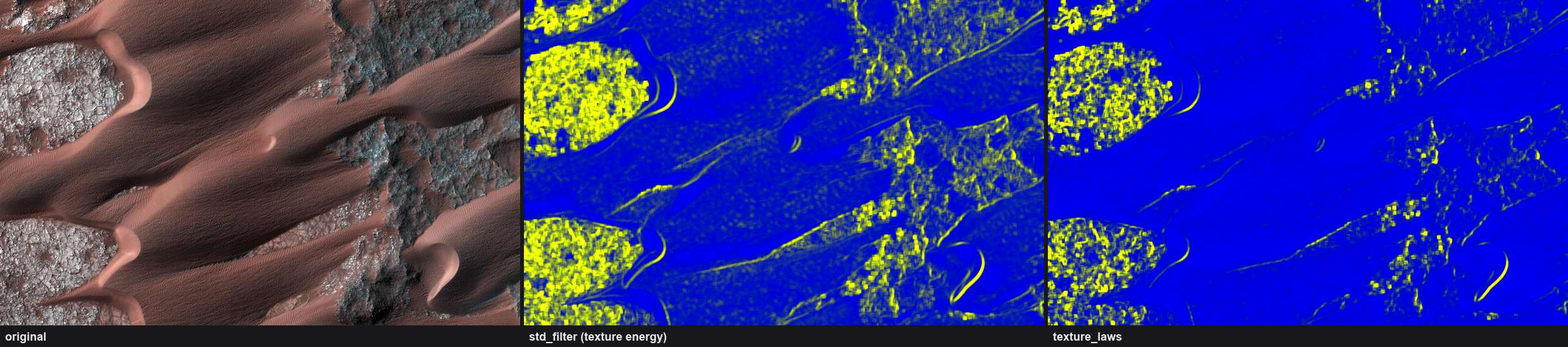
↑ The texture of Martian dunes (NASA/JPL-Caltech/Univ. of Arizona, public domain) analyzed with std_filter / texture_laws.
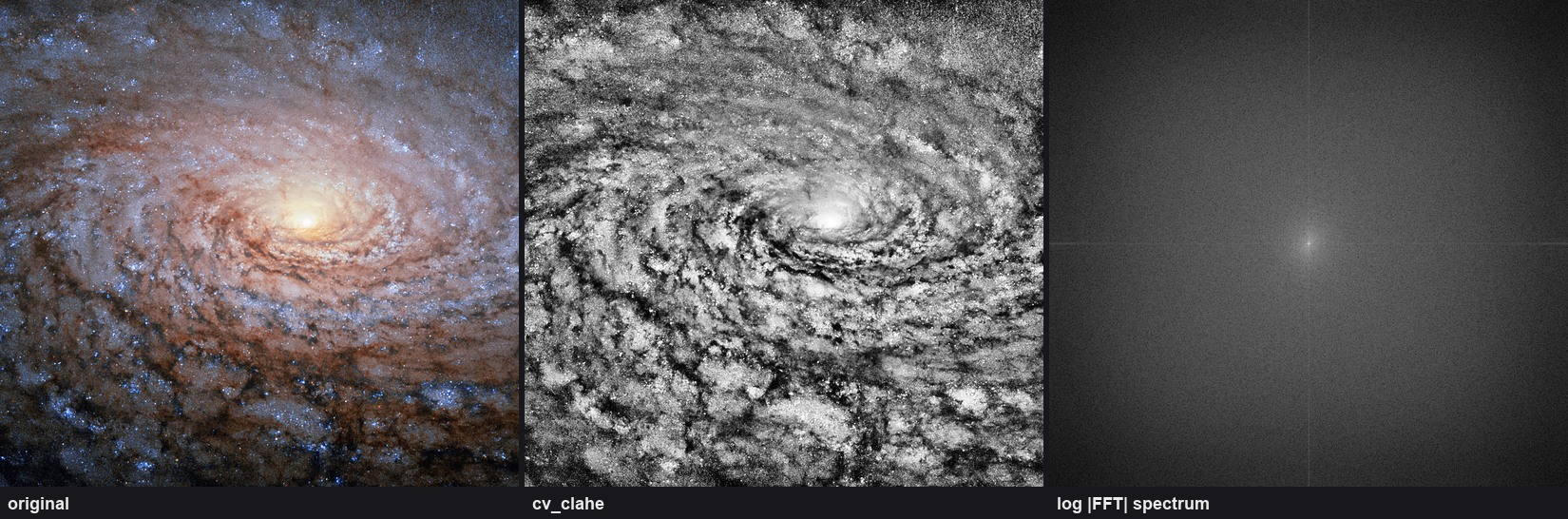
↑ The frequency structure of a spiral galaxy (NASA GSFC, public domain) visualized with cx_fft.
Medicine (Everything in This Block Is AI-Generated Simulated Data)
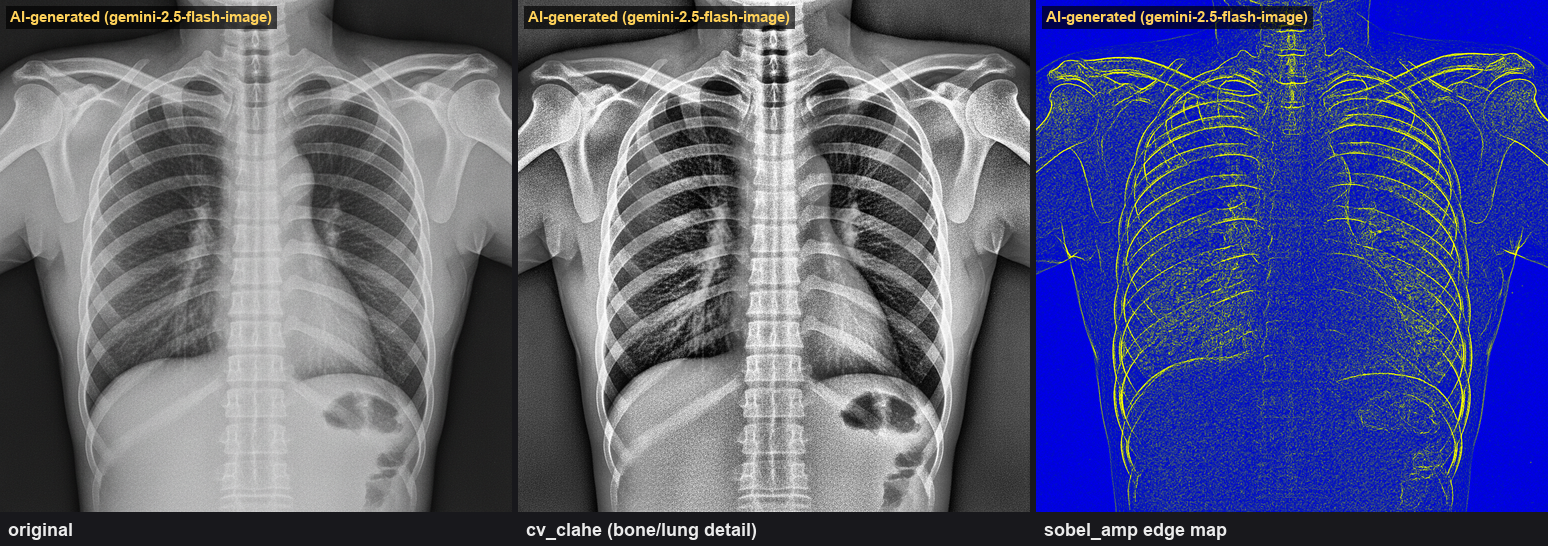
↑ A chest-X-ray-style image enhanced and edge-extracted with cv_clahe + sobel_amp. AI-generated simulated data (not a real patient or scan).
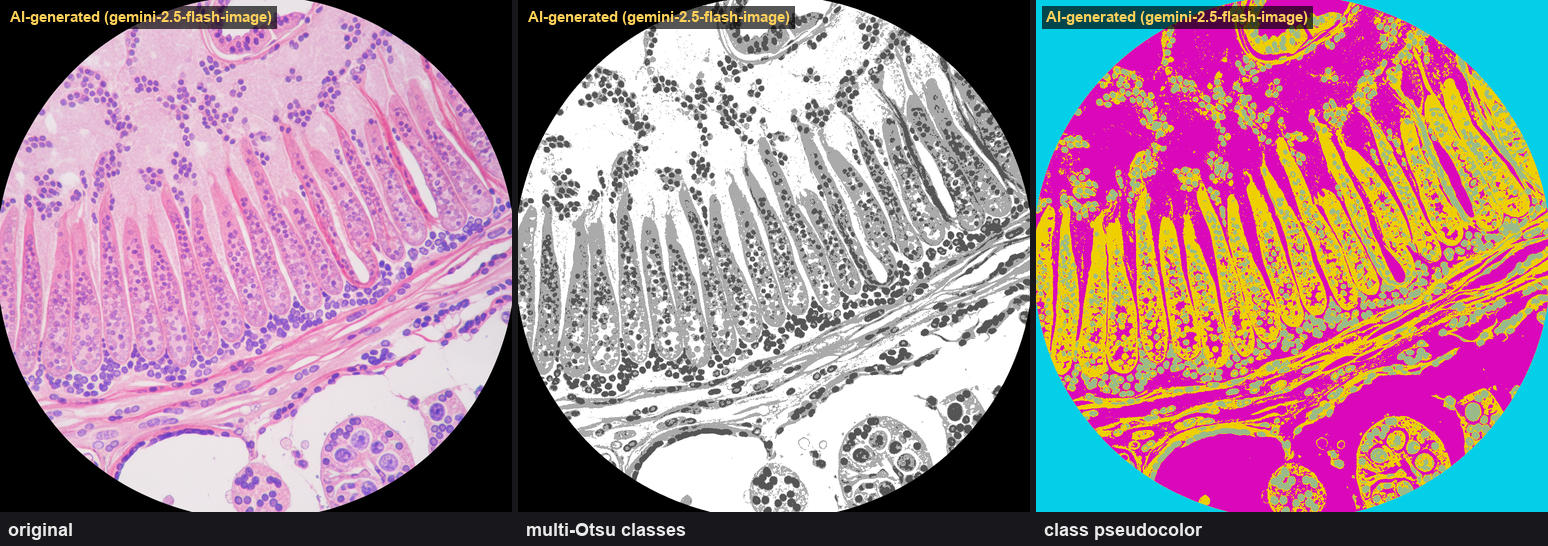
↑ An H&E-tissue-section-style image tissue-classified by multi-Otsu. AI-generated simulated data.
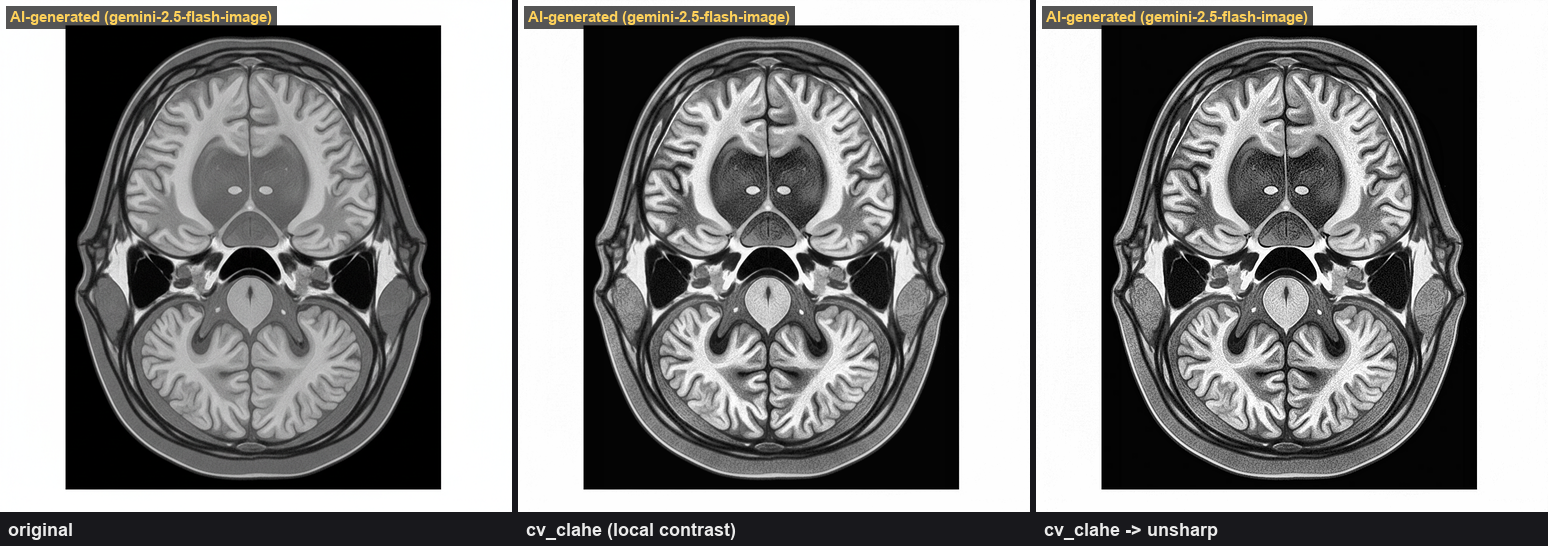
↑ A brain-MRI-style image with tissue contrast enhanced by cv_clahe + unsharp. AI-generated simulated data.
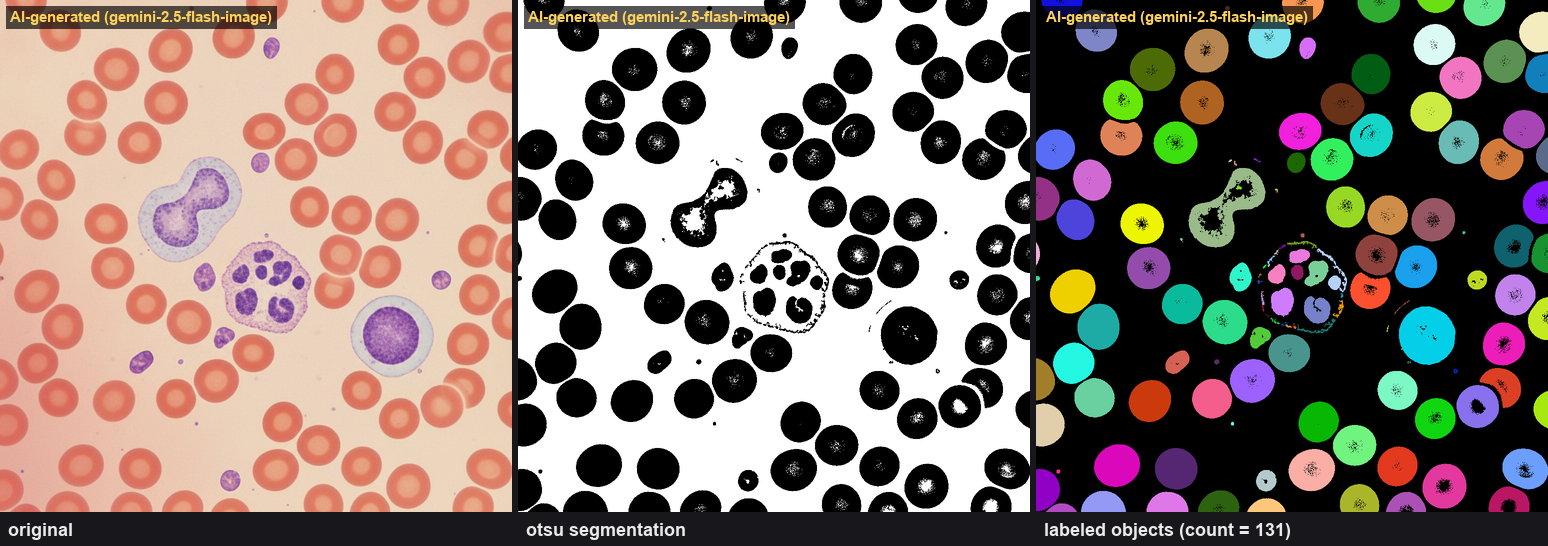
↑ Blood cells in a blood-smear-style image segmented and counted (131 detected). AI-generated simulated data. Ops used: segment_objects(otsu), colorize_labels.
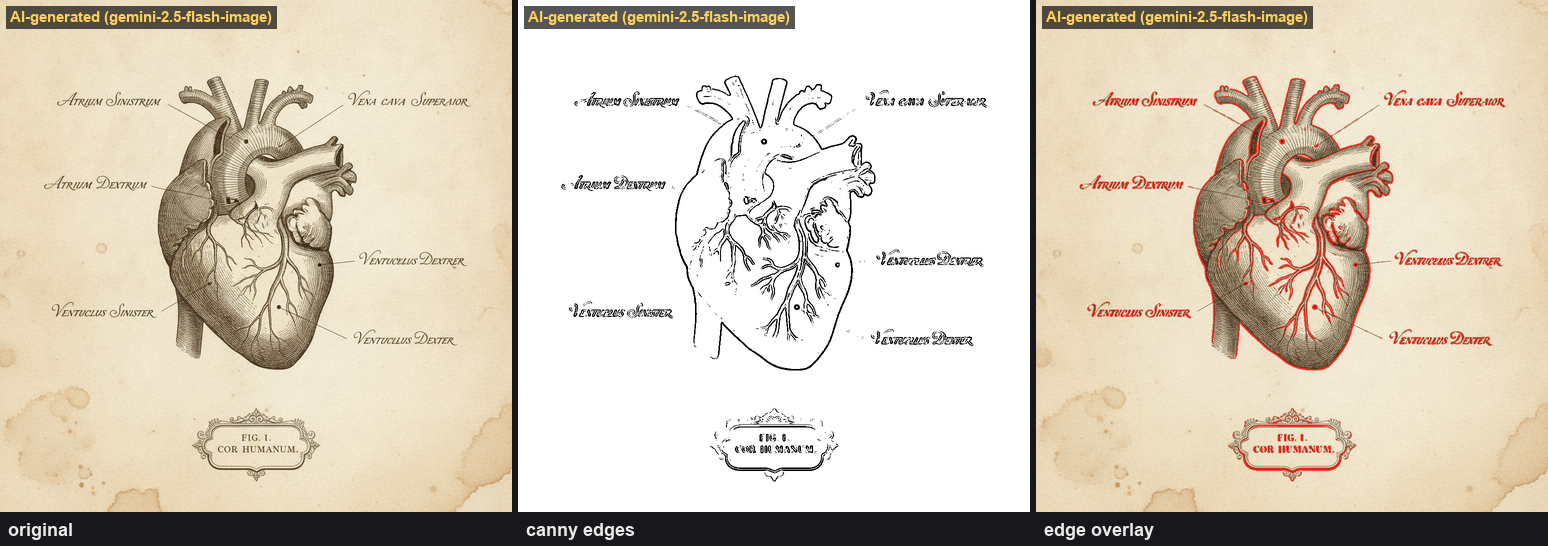
↑ The contours of an anatomical-illustration-style image extracted with canny. AI-generated simulated data.
Biology
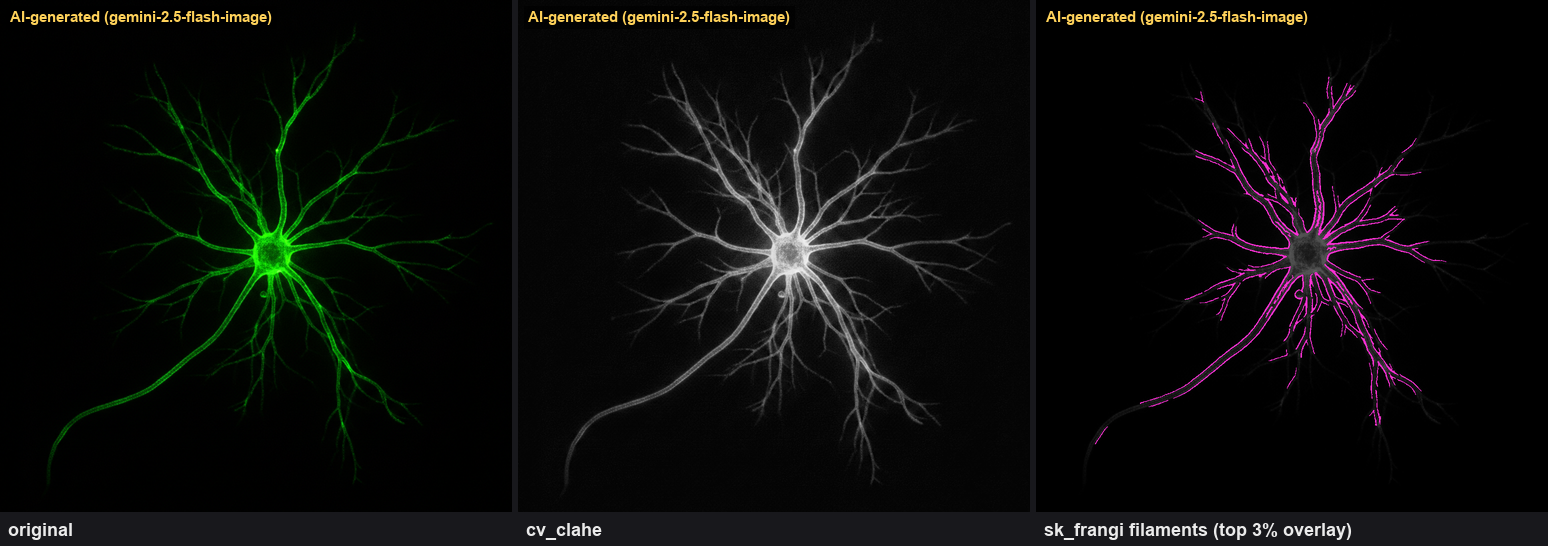
↑ The dendrites in a neuron fluorescence image traced with sk_frangi. AI-generated simulated data.
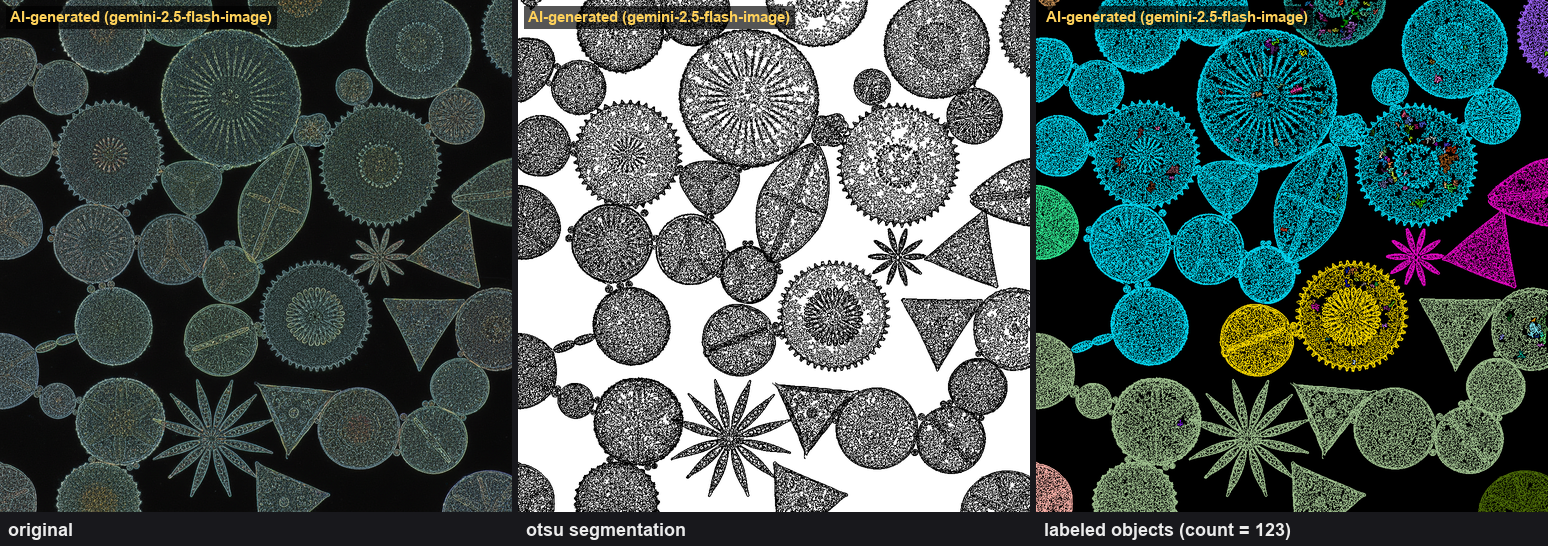
↑ A diatom micrograph segmented and counted (123 detected). AI-generated simulated data.
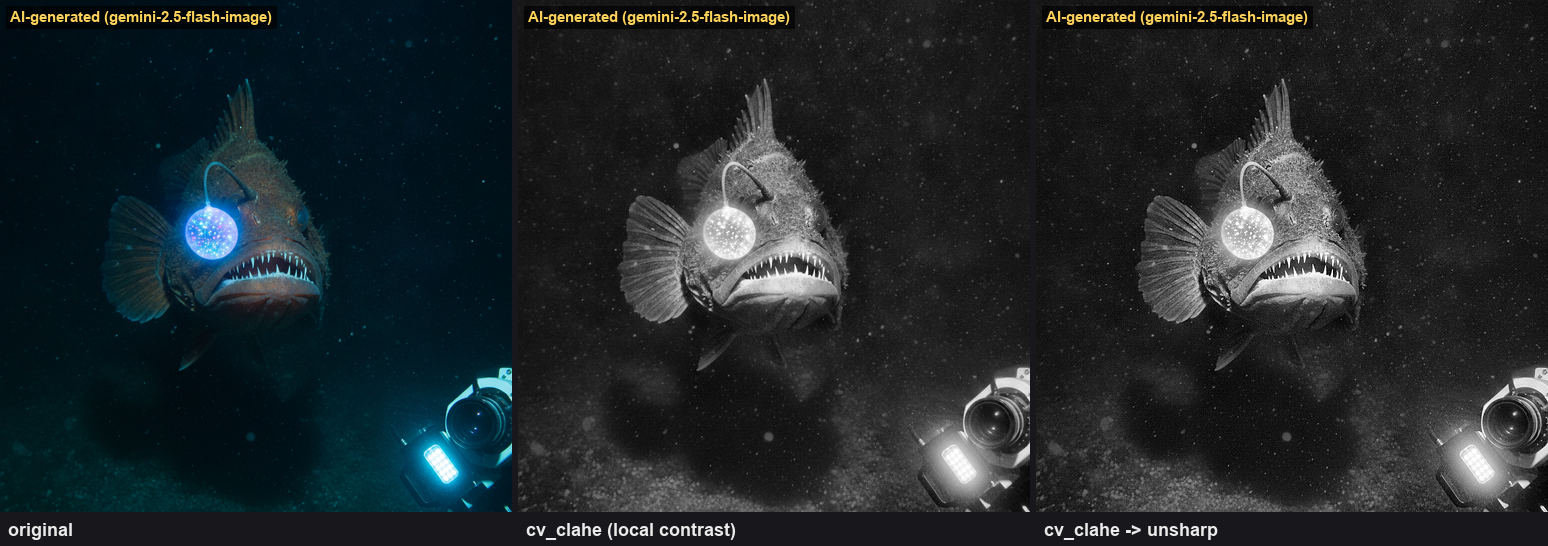
↑ The dark regions of a deep-sea creature enhanced with cv_clahe. AI-generated simulated data.
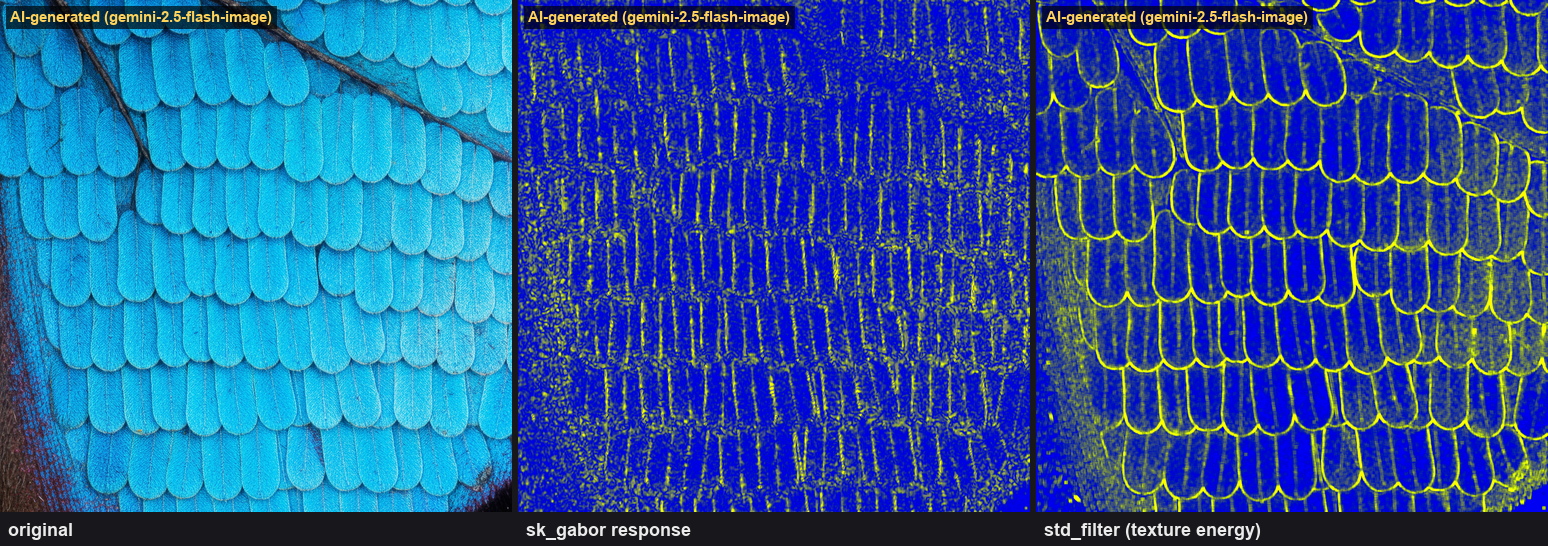
↑ The periodic structure of a butterfly’s wing scales analyzed with sk_gabor. AI-generated simulated data.
Archaeology
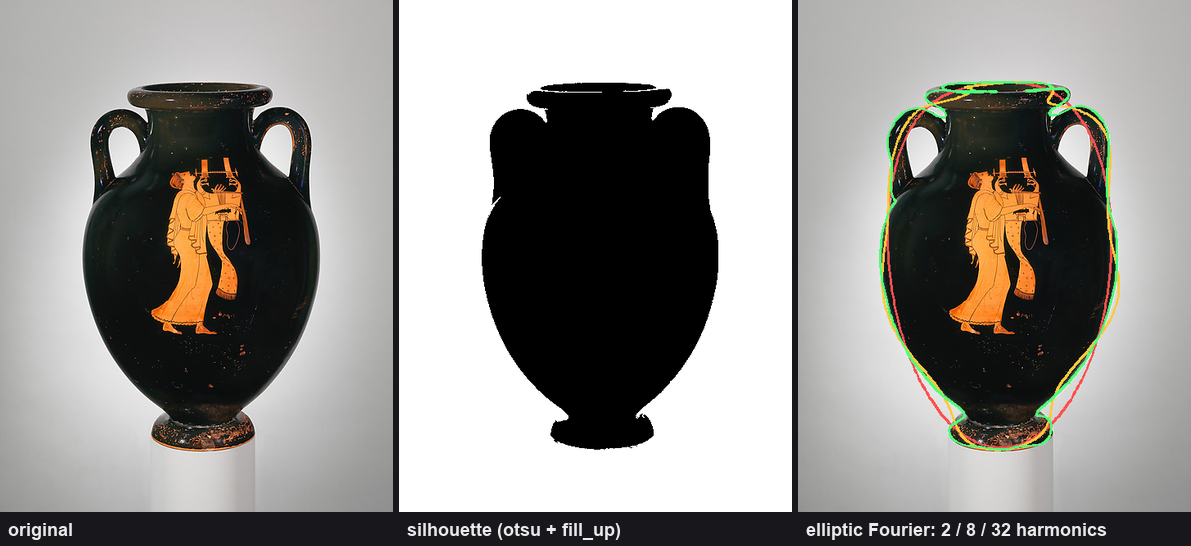
↑ The silhouette of an amphora (The Metropolitan Museum of Art Open Access, CC0) shape-reconstructed with elliptic Fourier descriptors (EFD). Raising the harmonics 2 → 8 → 32 makes the curve cling ever closer to the contour — a method actually used in archaeological pottery-shape classification. Ops used: otsu, fourierdesc.elliptic_fourier, fourierdesc.reconstruct.
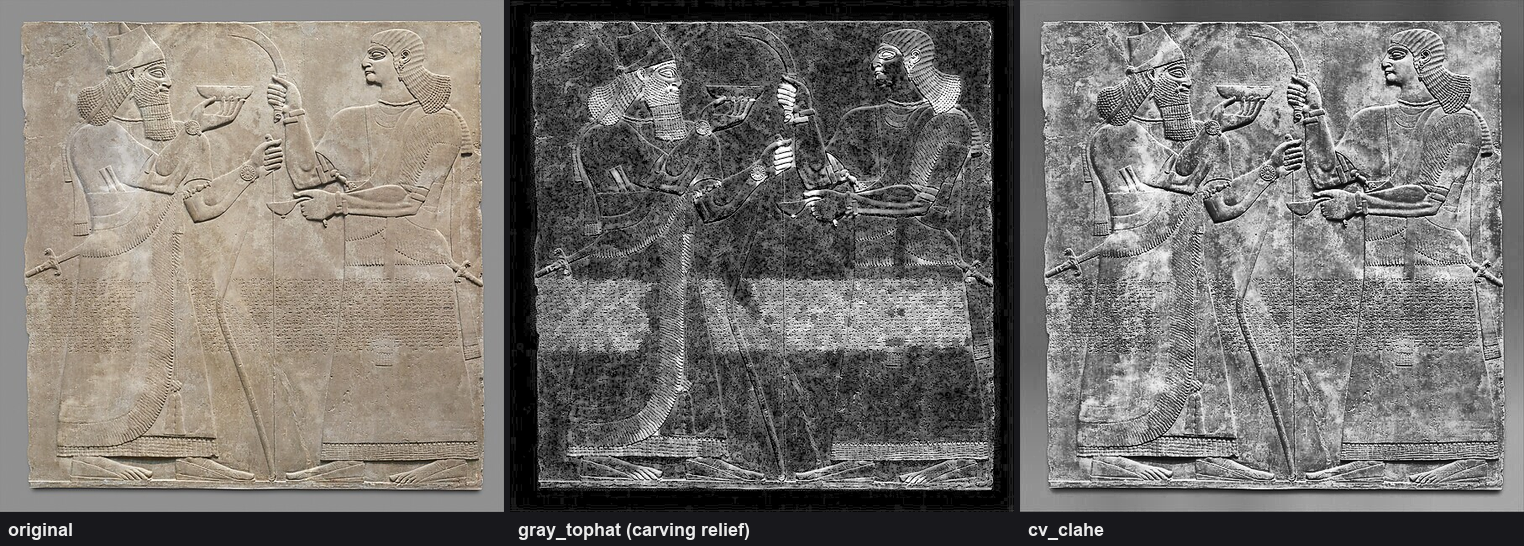
↑ The carving of an Assyrian stone relief (The Metropolitan Museum of Art, CC0) relief-enhanced with gray_tophat.
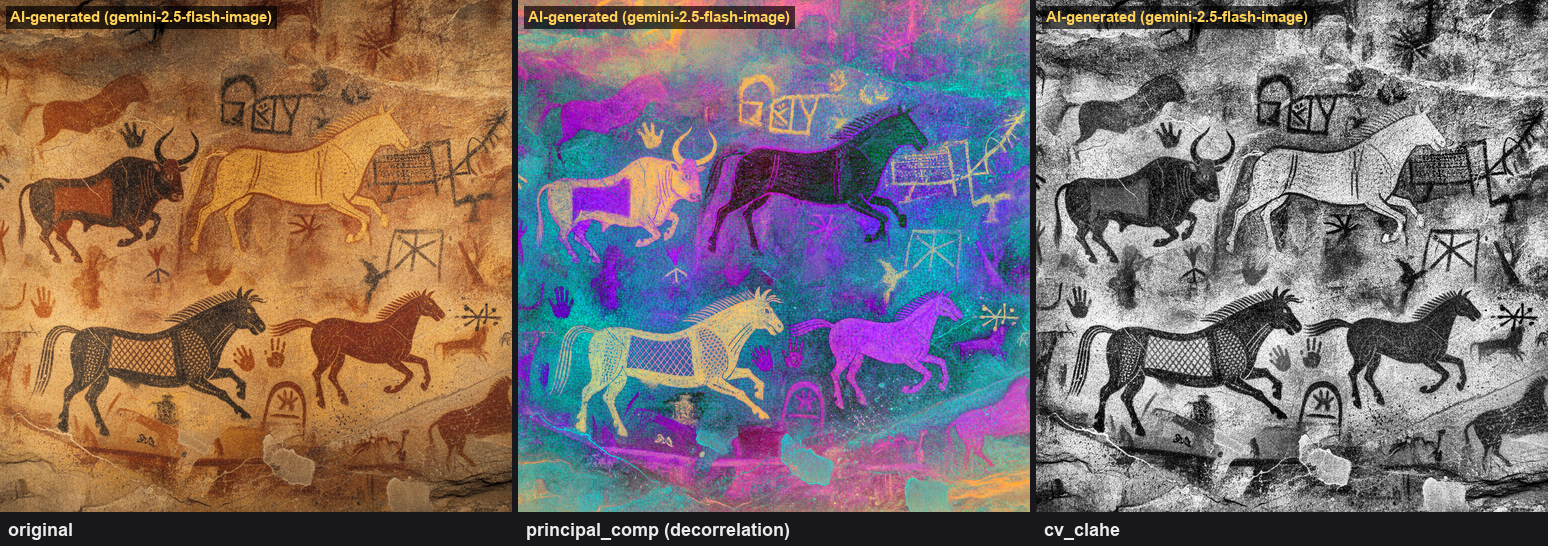
↑ The fading pigments of a cave painting enhanced with decorrelation stretch (the same family of technique as DStretch, the rock-art survey standard). AI-generated simulated data. Op used: principal_comp.
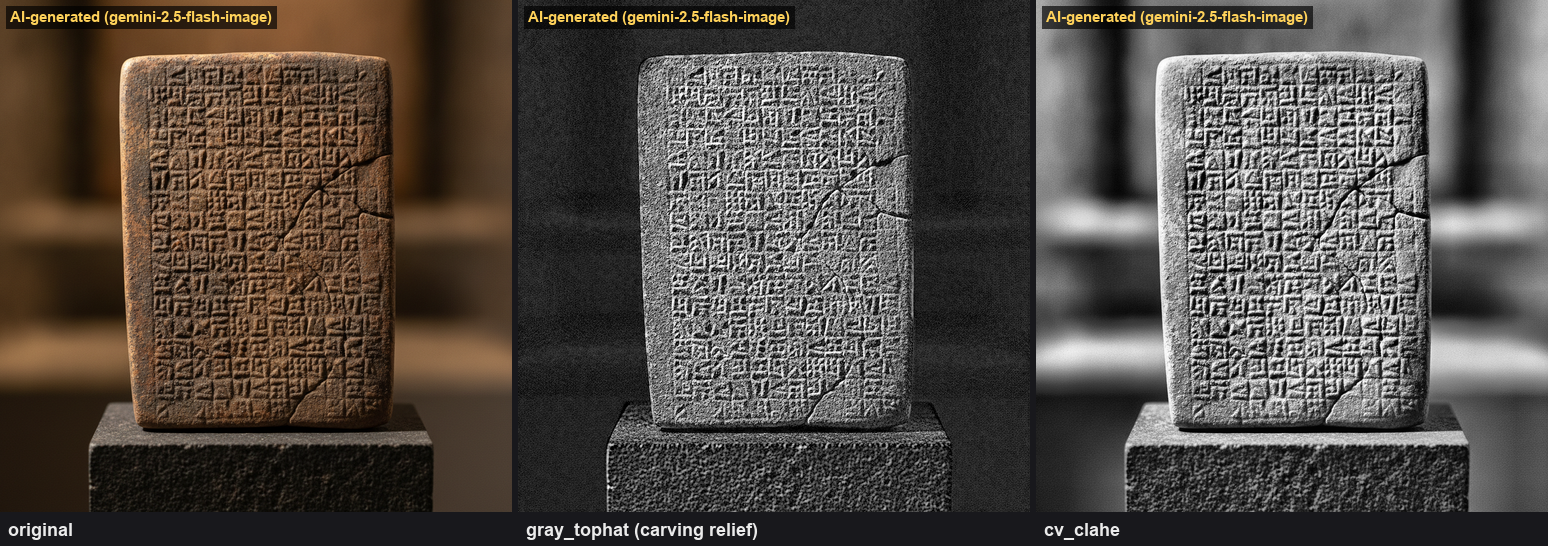
↑ The character impressions of a cuneiform clay tablet enhanced with gray_tophat. AI-generated simulated data.
Geology, Meteorology, Oceanography, Botany
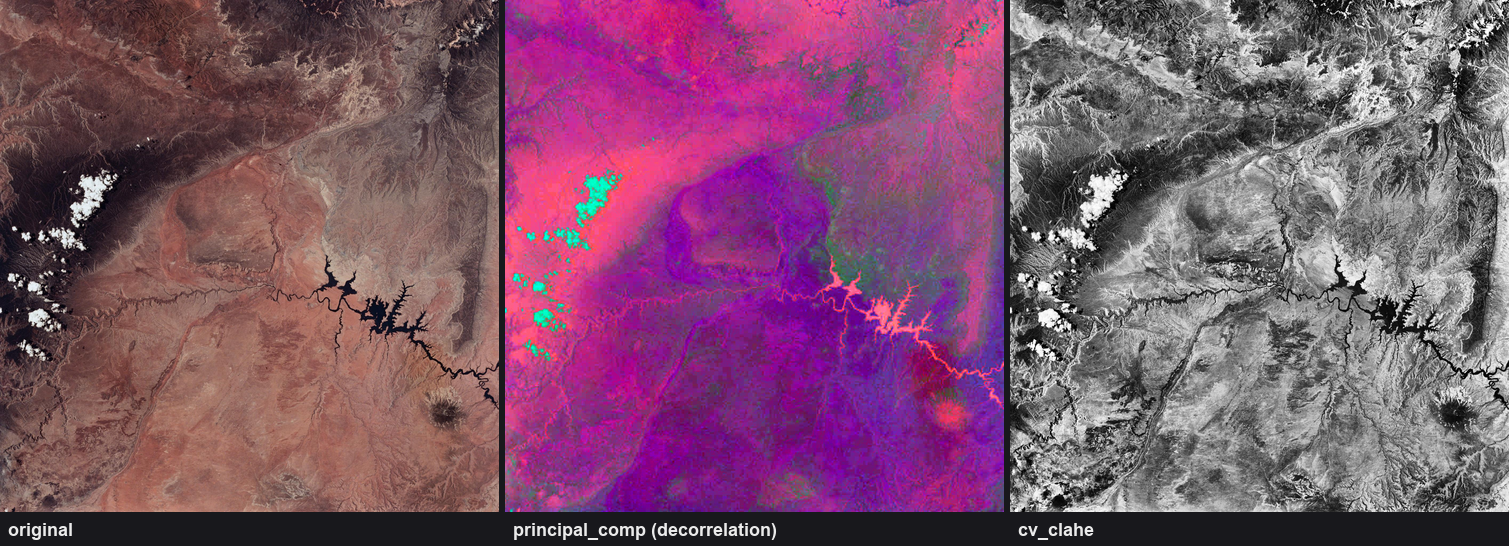
↑ The lithology in a satellite image (NASA JSC, public domain) enhanced with decorrelation stretch (a remote-sensing standard).
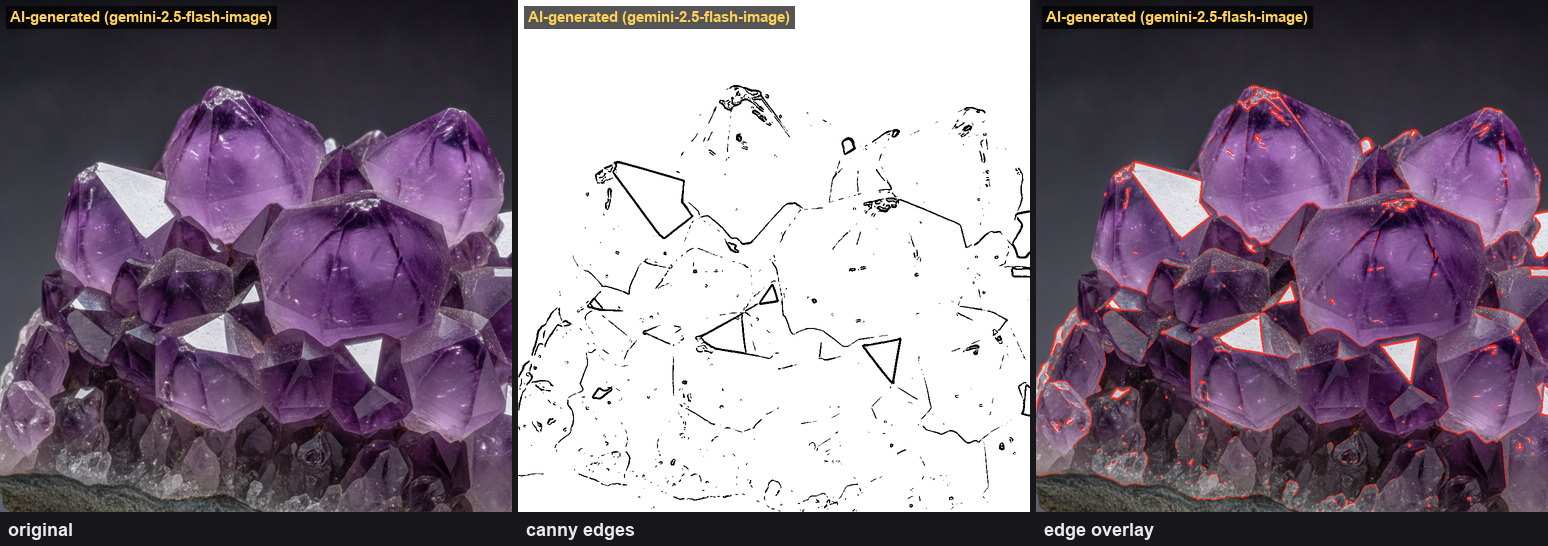
↑ The facet ridgelines of an amethyst crystal extracted with canny. AI-generated simulated data.
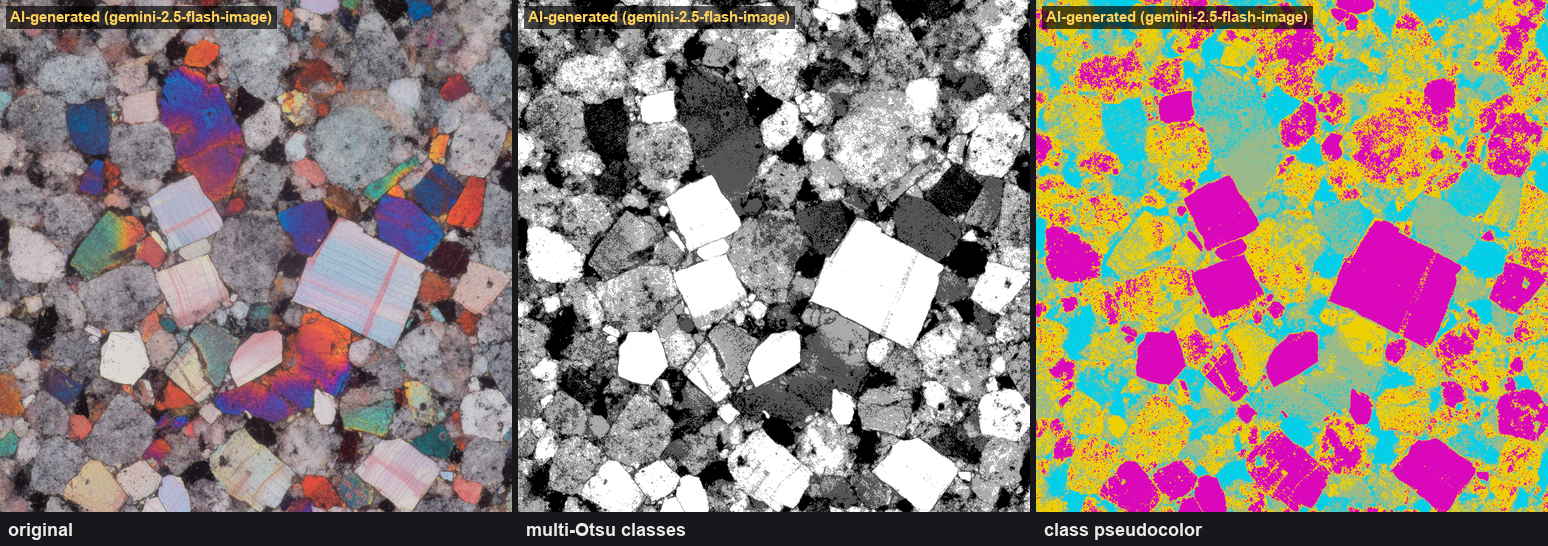
↑ A rock thin section (polarized-microscope style) classified into mineral grains by multi-Otsu. AI-generated simulated data.
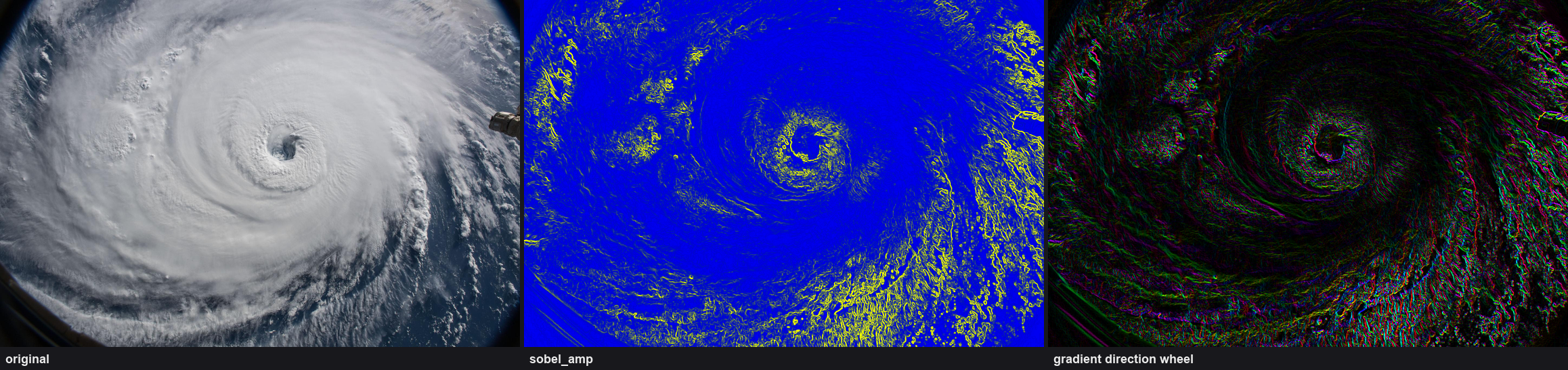
↑ The vortex structure of a hurricane (NASA JSC, public domain) visualized with a gradient-direction wheel (sobel_dir + colorize_flow).
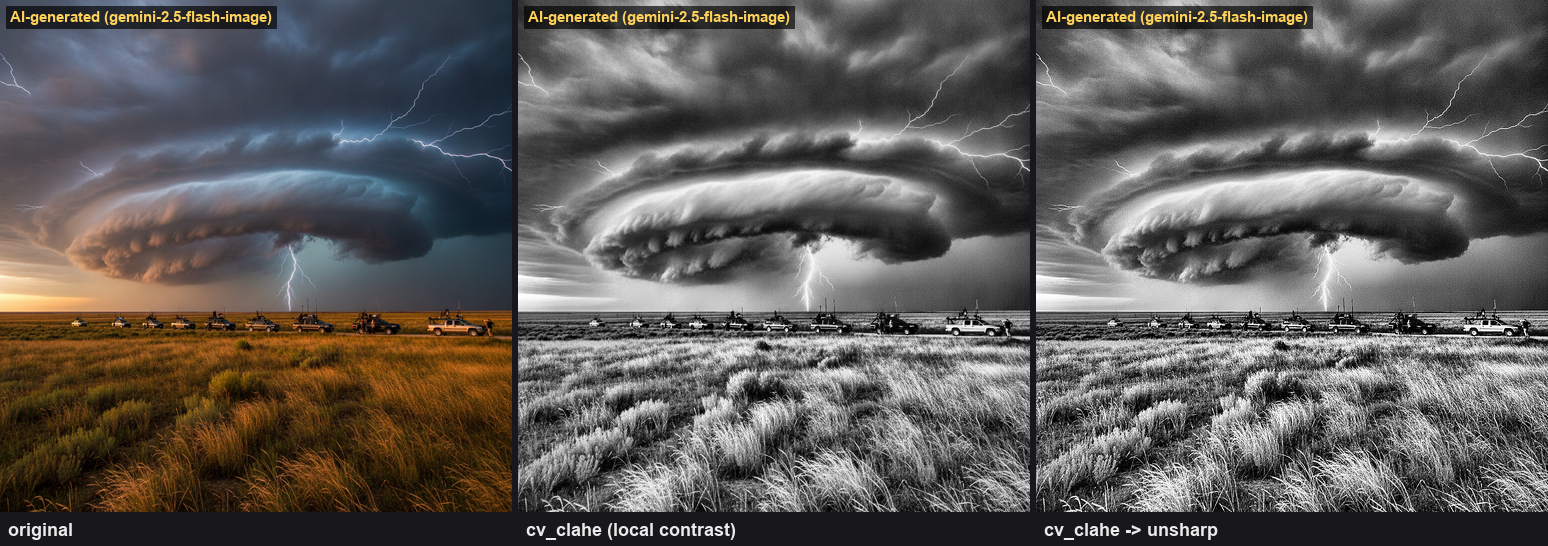
↑ A supercell thunderstorm structure-enhanced with cv_clahe + unsharp. AI-generated simulated data.
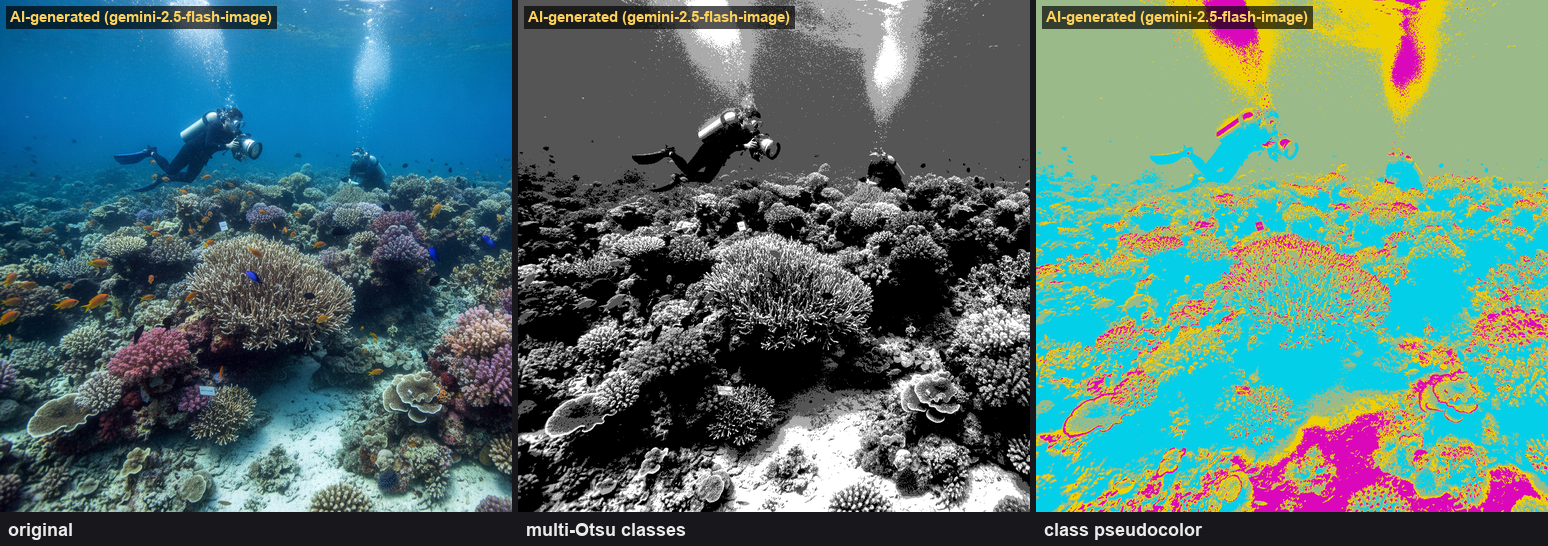
↑ A coral reef coverage-classified by multi-Otsu (marine-survey style). AI-generated simulated data.
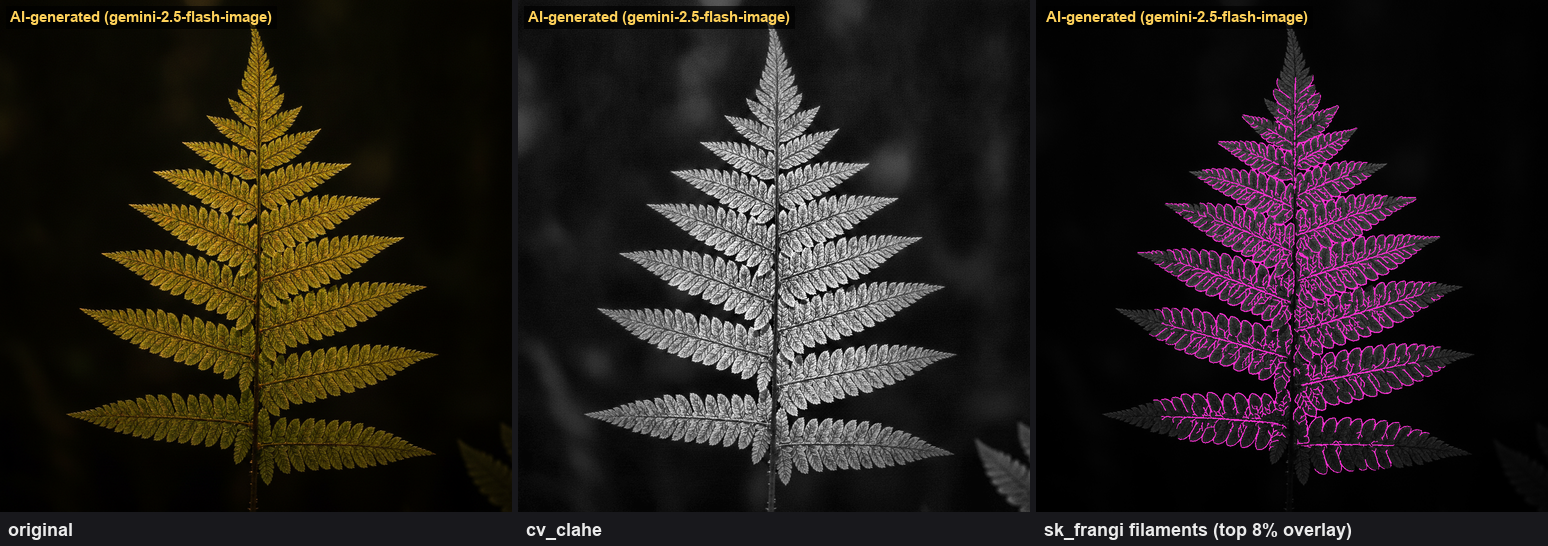
↑ The leaf veins of a fern extracted with sk_frangi. AI-generated simulated data.
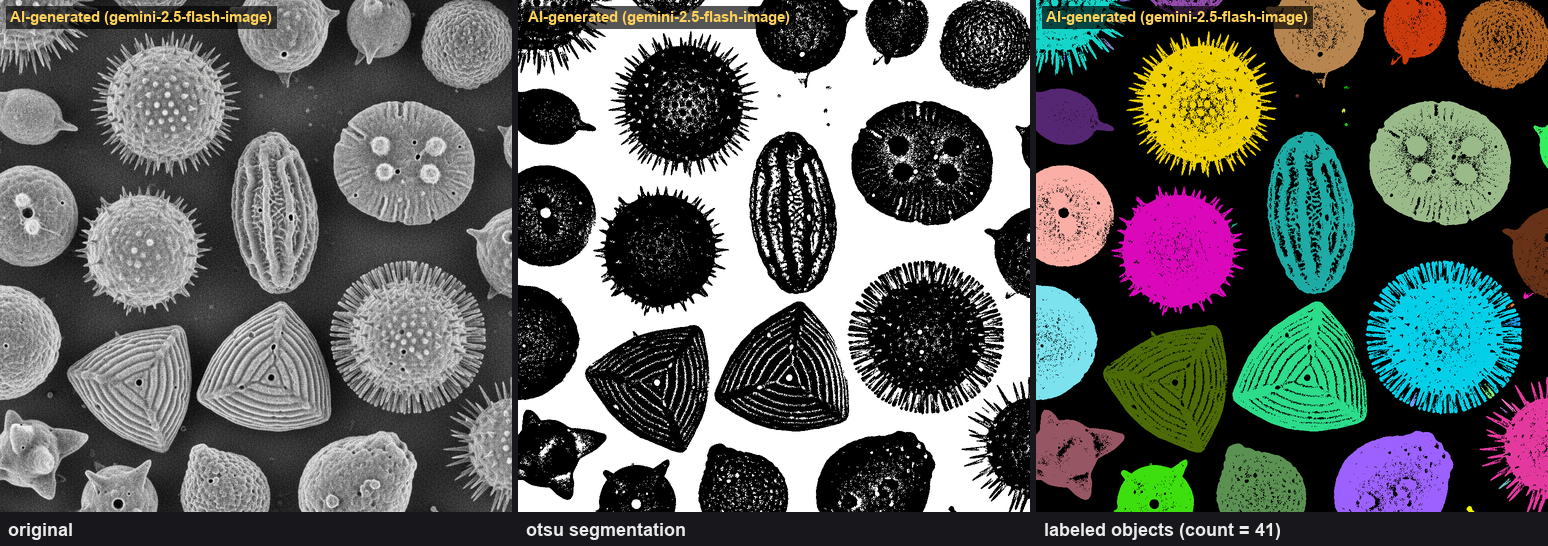
↑ A pollen-SEM-style image segmented and counted (41 detected). AI-generated simulated data.
Across these 41 exhibits, every piece of real data carries its source and license (the detailed attribution table is in ACADEMIC_ATTRIBUTION.md), and every AI-generated piece is labeled as such. One bonus — this exercise of “running diverse real data through the ops” turned out to be a bug detector in its own right. Five op defects that had never surfaced on synthetic data showed up on real data, and all five were fixed before publication (the discovery stories and regression tests are in docs/KNOWN_ISSUES.md). Behind the pretty exhibits, it doubled as a test — two birds with one stone.